
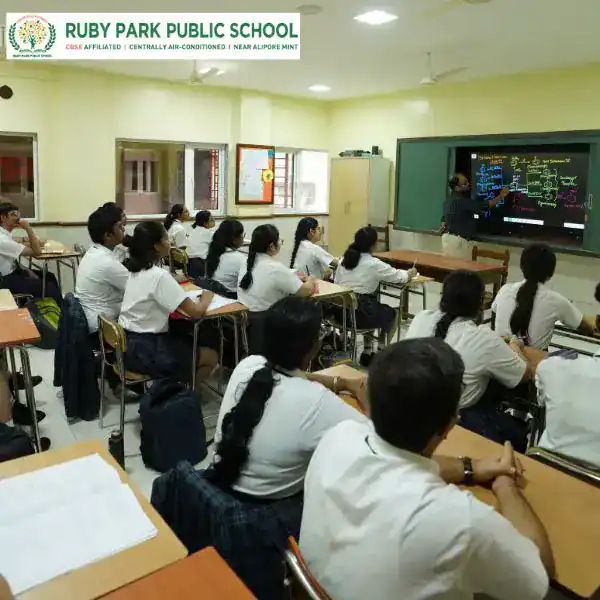
A classroom is no longer simply a place where students listen, take notes, and reproduce answers in an examination. As the world changes, education must prepare young learners to think independently, solve unfamiliar problems, and respond confidently to new situations. This shift has also influenced school education in India.
The National Education Policy (NEP) 2020 places importance on critical thinking, problem-solving, communication, teamwork, and other social-emotional skills alongside academic knowledge. In this blog, we will discuss why top CBSE schools in Kolkata focus on skills, not just syllabi, and how this approach can make learning more meaningful.
Why Skills Matter Alongside the Syllabus
Here’s why skill development has become just as important as completing the syllabus.
Knowledge becomes Useful When Students Can Apply It
We all know that learning a concept is only the first step. Students also need to understand where and how they can use it. Competency-based education encourages learners to apply knowledge and skills to real-world situations instead of relying only on memorisation. For example, learning percentages in mathematics becomes more meaningful when students use them to understand discounts, savings, or simple budgeting.
Critical Thinking Prepares Students for Real Problems
Life rarely provides questions with answers that appear at the end of a textbook. Hence, students need to examine information, compare possibilities, and make sensible decisions. Modern teaching therefore encourages critical thinking and problem-solving. These abilities can help students approach unfamiliar situations with greater confidence.
Communication Builds Confidence
A student may understand a topic well but struggle to explain it. In such a context, classroom discussions, presentations, debates, and group activities can give learners opportunities to express their thoughts clearly. Strong communication skills can also support students not only in academics but also in higher education, careers and everyday interactions.
Collaboration Teaches Students to Work with Others
Do you know that many real-world tasks require teamwork? Group projects and classroom activities allow students to share ideas, divide responsibilities, and learn from different viewpoints. These experiences also develop patience, cooperation and leadership. NEP 2020 specifically recognises teamwork, leadership, empathy and perseverance as important aspects of holistic development.
Creativity Encourages Students to Think Differently
Another very notable advantage of creativity is its capacity to encourage students to think differently. A syllabus can tell students what they need to learn, but creative activities can encourage them to explore how they can use that knowledge. Projects, art, technology-based activities, experiments and open-ended tasks can give students room to question, create and discover. This makes learning more active instead of purely textbook-driven.
Technology Demands New-Age Skills
Digital tools are now a major part of everyday life. Schools therefore need to help students use technology thoughtfully while developing skills such as digital literacy, research, collaboration, and responsible online behaviour. CBSE’s current skill-education framework includes areas such as Artificial Intelligence, vocational education and skill modules. This shows the growing role of practical competencies in school education.
Learning becomes More Student-Centred
Modern classrooms increasingly encourage students to take an active role in their learning. Instead of simply receiving information, they can ask questions, work independently, collaborate with classmates, and reflect on their progress.
This approach aligns with Ruby Park Public School’s student-centric pedagogy, which encourages independent learning, collaboration, and personal learning goals. The school also states that its curriculum aligns with NEP 2020 and focuses on 21st-century life skills.
The Conclusion
In summary, the purpose of education extends beyond completing chapters before an examination. A strong modern classroom should help students understand concepts while developing the skills needed to use that knowledge confidently. Critical thinking, creativity, communication, collaboration, problem-solving, and digital awareness can help learners become more independent and future-ready.
For parents seeking a CBSE school in Kolkata that combines academic learning with skill development and holistic growth, Ruby Park Public School offers a student-centred educational environment supported by modern pedagogy, technology and co-curricular opportunities. Contact Ruby Park Public School for CBSE school admission in Kolkata and give your child an education designed to build knowledge, confidence and essential 21st-century skills.